Pierce College Fort Steilacoom, Steilacoom, WA
Pierce College Fort Steilacoom Glacier Building
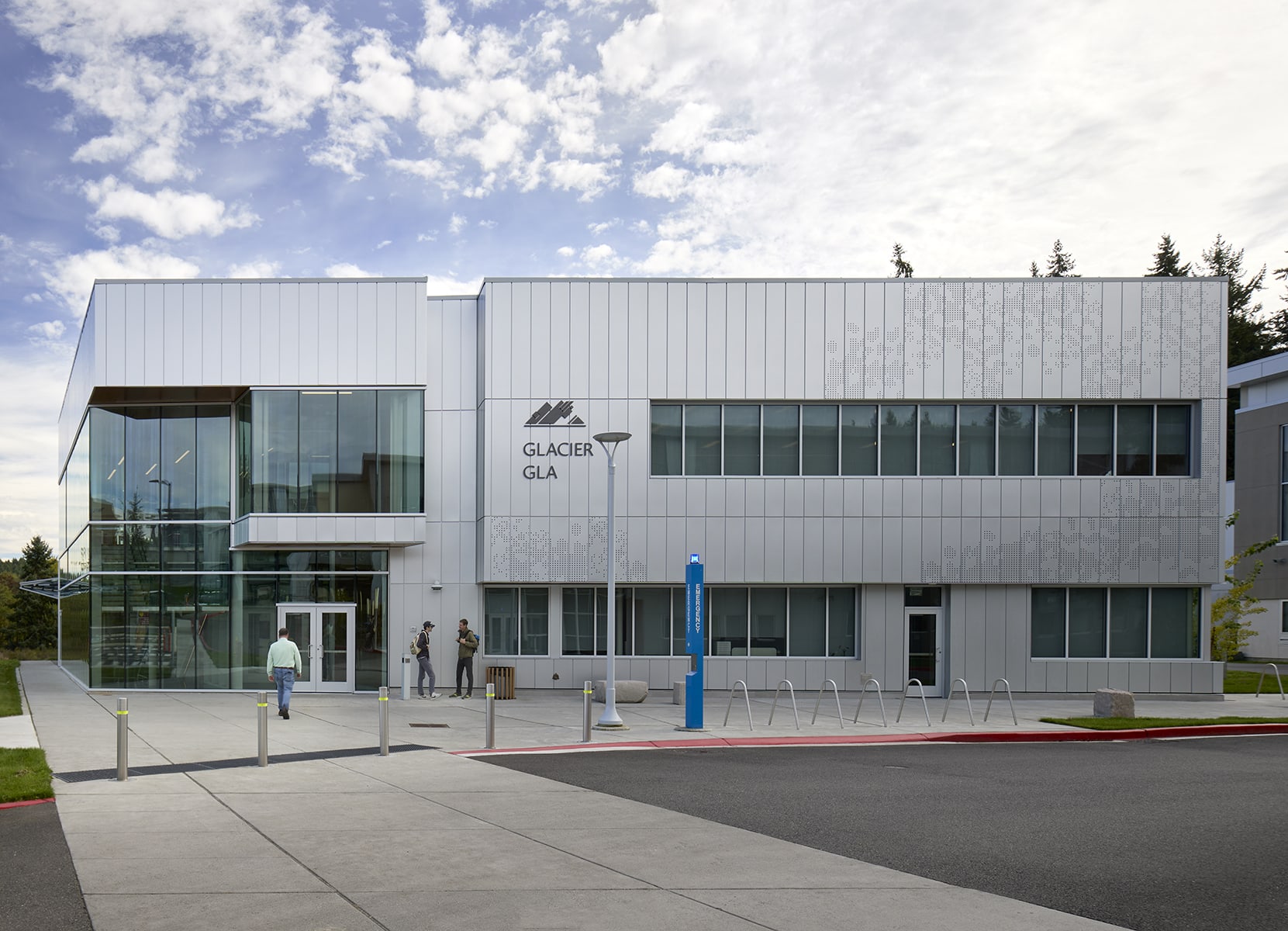
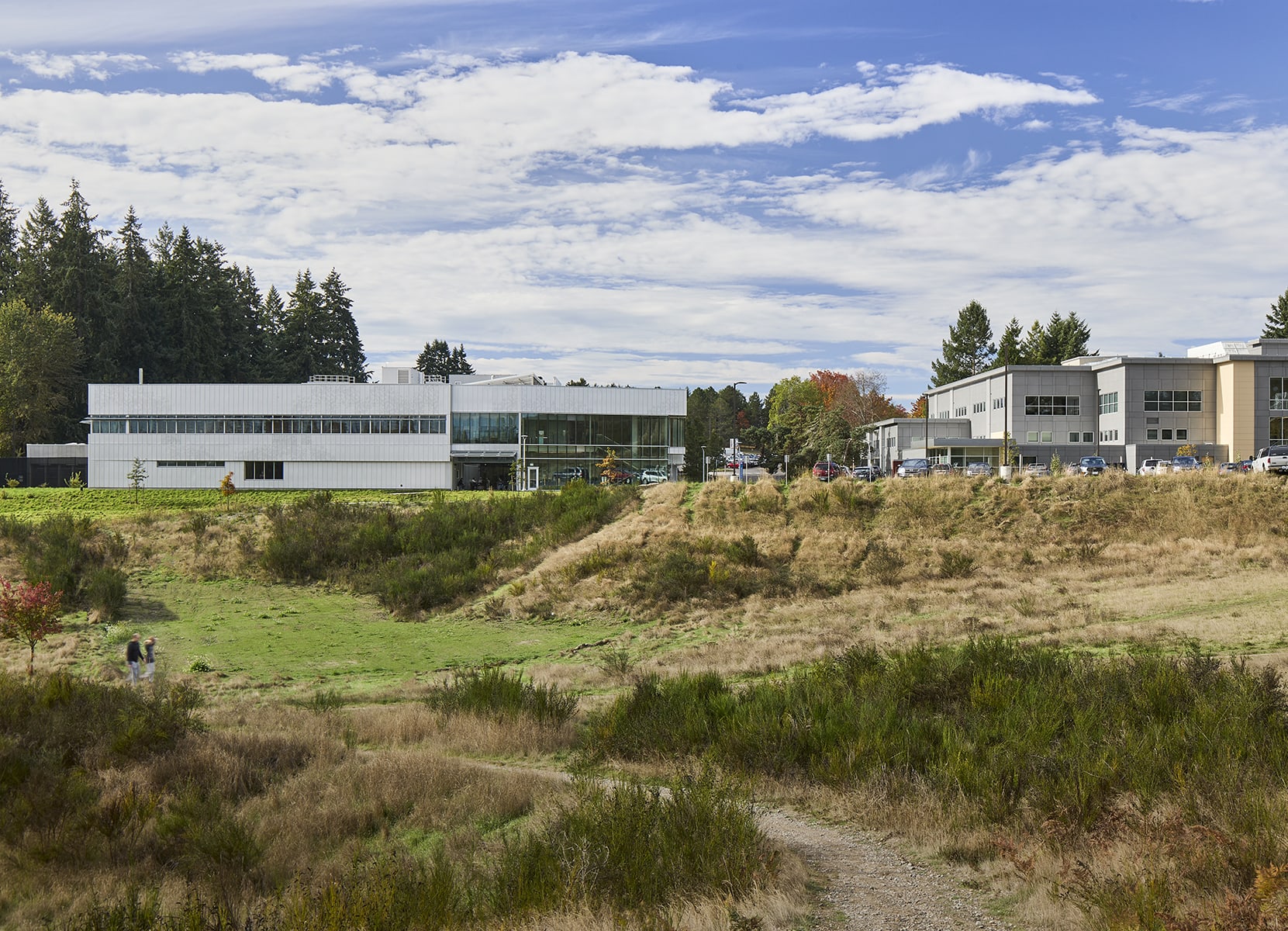
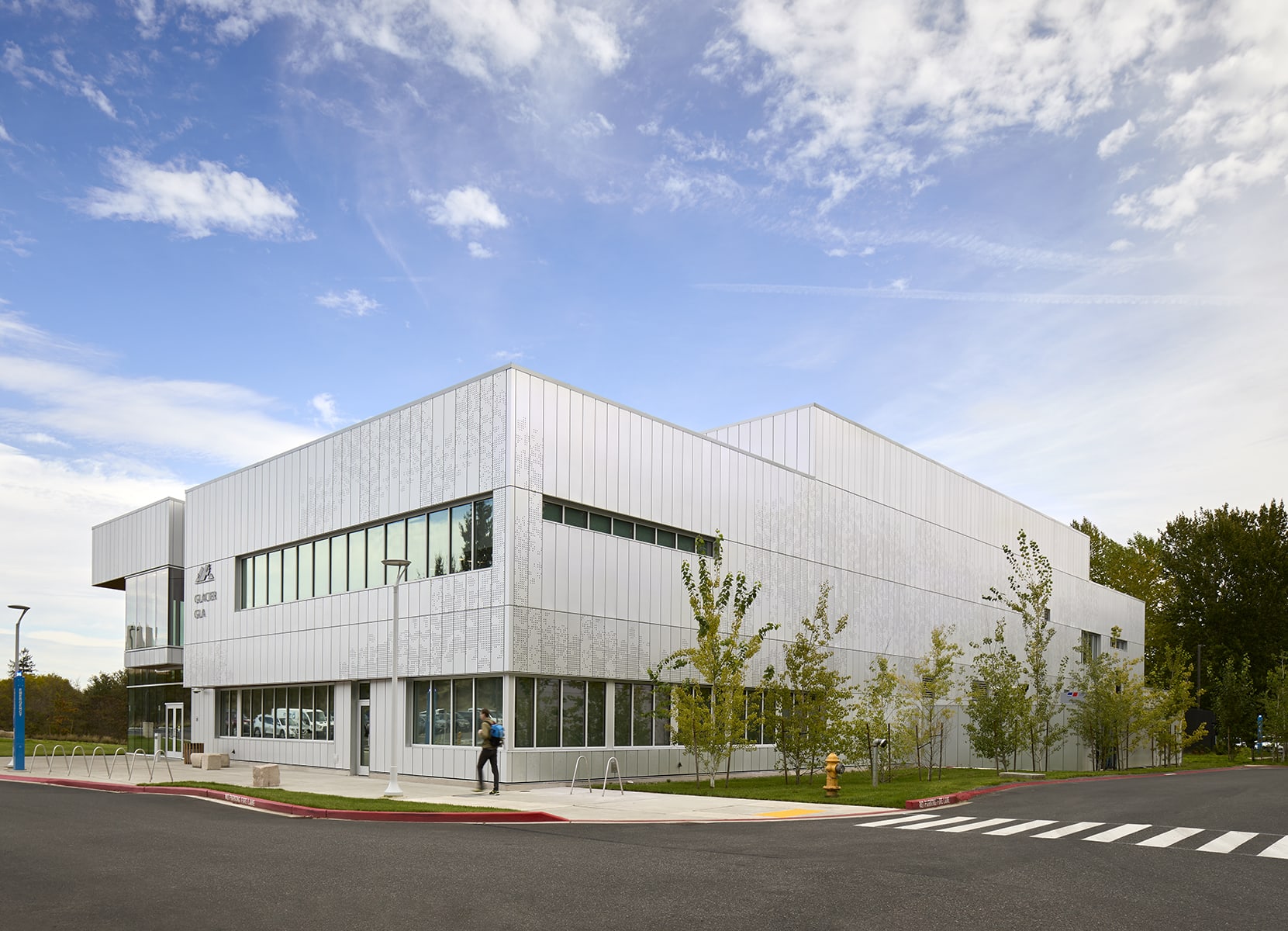
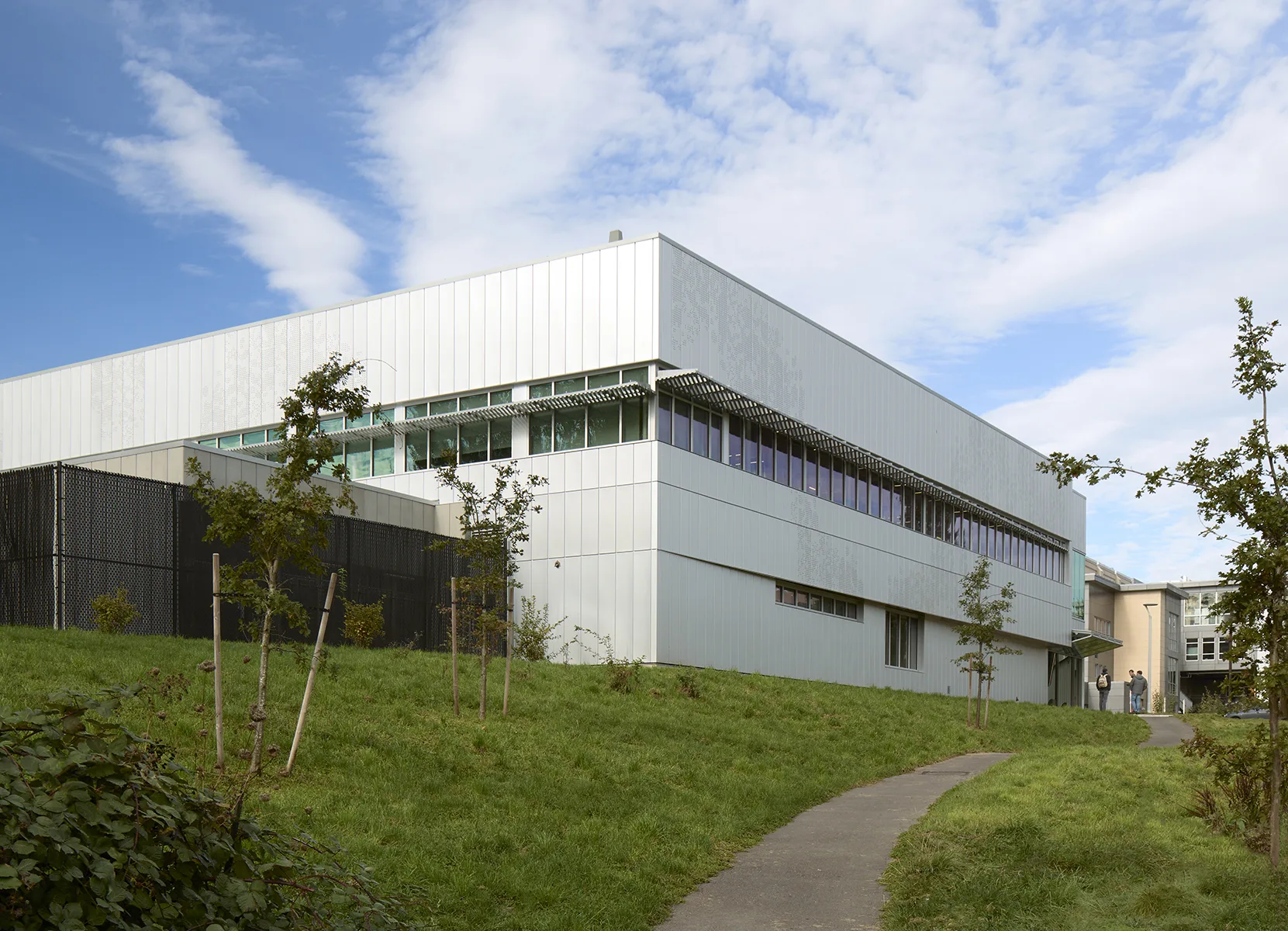
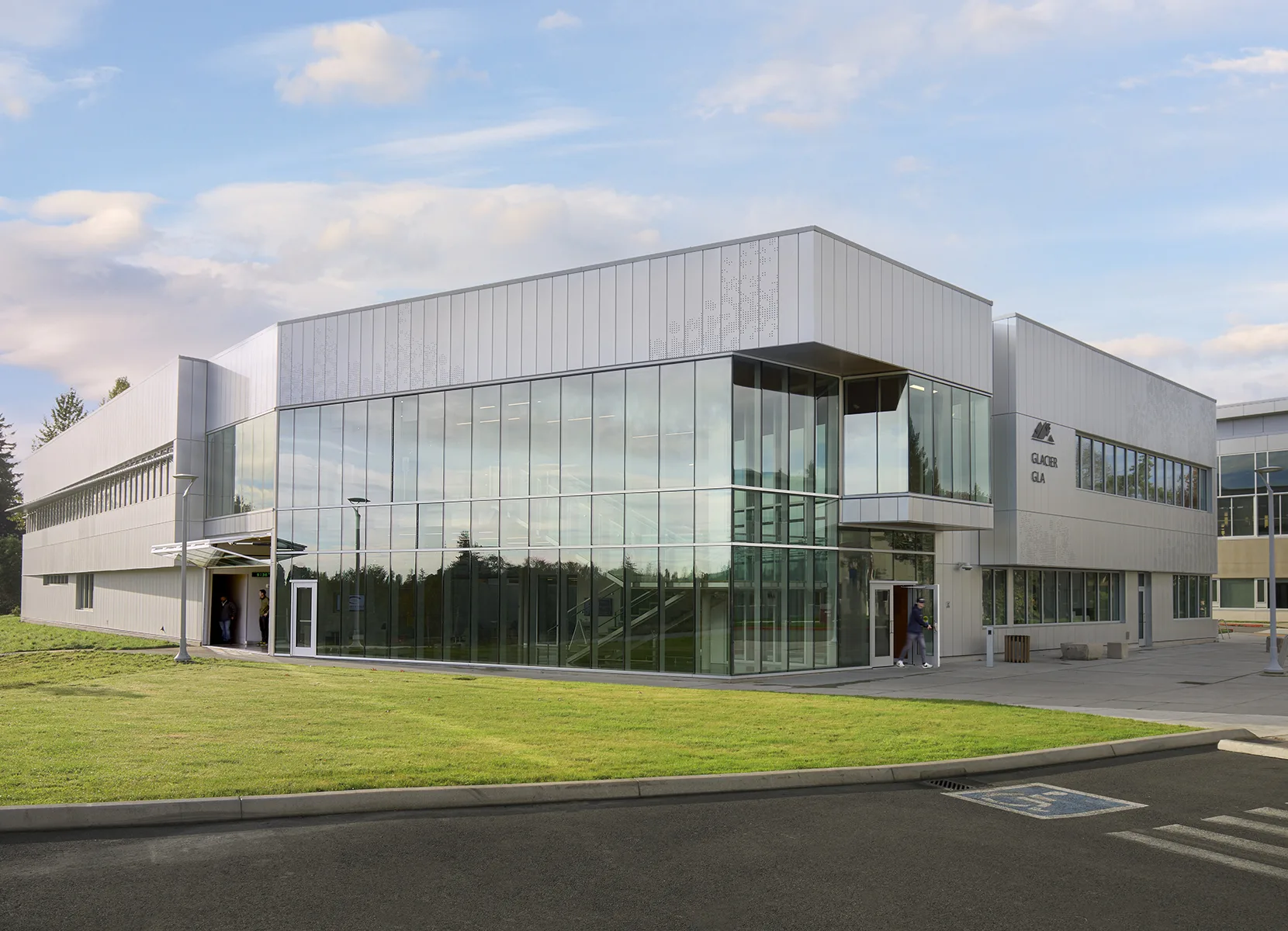
AHBL provided civil engineering and land surveying services for this two-story, 36,000 SF Glacier Building, home to Pierce College Fort Steilacoom’s Dental Hygiene and Veterinary Technology programs. The Dental Hygiene program provides low-cost services to qualified community members, and the Veterinary Technology program hosts and cares for rescue animals that are available for adoption annually.
Due to high stormwater infiltration rates, AHBL designed an on-site conveyance and bioretention system to provide both water quality treatment and infiltration of stormwater, with sand and sediment separators along sewer service lines to capture animal hair and debris before discharge to the sanitary sewer mains.
AHBL also provided services for the reconfigured parking lot, which was redesigned to allow semitruck turnaround in a part of the campus where it was previously difficult to do so. Parking lot improvements included adding 49 parking stalls and 10 ADA parking stalls, along with pedestrian connections between Glacier Building and the existing Cascade Building adjacent to the pedestrian path to Waughop Lake.
Photography: Doug Walker
Teaming Partners
- Owner: Pierce College
Architect: McGranahan Architects
Contractor: Andy Johnson and Company
Related Projects