
How Infrastructure Improvements Are Extending the Life of Aging School Campuses
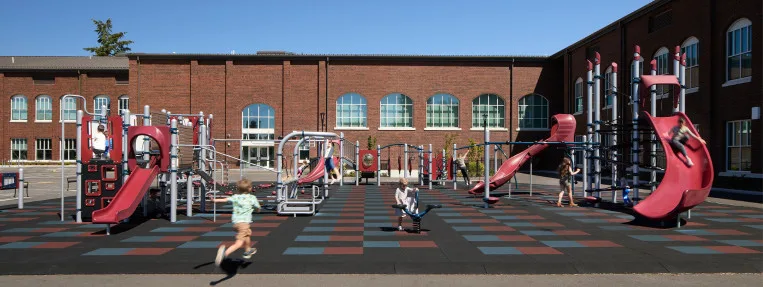
Terminal Park Elementary School, Auburn, WA Photo: Doug Walker
By Bill Fierst
Written By Maddie Olson
Across Washington, many school campuses are reaching an age where decades-old infrastructure no longer aligns with modern expectations for safety, accessibility, security, and environmental performance. As districts work to extend the life of existing facilities, campus modernization has become a strategic investment in both student success and community resilience.
While classroom technology and educational programming often dominate conversations around school improvements, many of the most impactful modernization efforts occur outside the building. Site circulation, stormwater infrastructure, accessibility upgrades, utility improvements, and campus security all play a significant role in extending the life of existing schools and ensuring they continue to serve students and communities for decades to come.
With more than 26 years of experience in civil engineering and site development, Bill Fierst, PE, Principal at AHBL, has helped school districts throughout Washington modernize aging campuses to meet evolving safety, accessibility, infrastructure, and operational needs. Through that work, he has seen firsthand that some of the most impactful improvements focus on how people move through a campus.
“One of the biggest improvements we make on school sites is separating bus traffic and parent traffic,” Fierst said. “Those are two different types of vehicle movements, and reducing those conflicts creates a safer environment for students, staff, and families.”
Many campuses were designed for different enrollment patterns and transportation needs than those they serve today.
“As schools have grown and transportation patterns have changed, there are more students arriving in different ways than when many of these campuses were first built,” Fierst said.
As a result, modernization projects frequently focus on improving circulation and reducing potential conflicts between vehicles, buses, and pedestrians. Reconfigured drop-off zones, updated parking layouts, and safer pedestrian routes can improve both functionality and safety without requiring entirely new facilities.
Campus security has also become a growing priority for districts.
“We’re seeing more emphasis on centralized entrances and designated visitor access points,” Fierst said. “Schools also want campuses that are easier to monitor, whether that’s through site layout, fencing, or creating more defined student areas.”
Many modernization projects incorporate these considerations from the earliest planning stages, pairing campus security enhancements with infrastructure upgrades designed to meet current standards.
“In urbanized areas, a lot of those neighborhoods were developed 50 years ago or more,” Fierst said. “In some cases, the existing water mains weren’t sized to meet today’s fire code requirements, so modernization projects have included significant water system improvements.”
While students and parents may notice a new entrance or reconfigured parking lot, some of the most complex modernization work takes place below ground.
Stormwater management is one of the most common challenges encountered on older campuses.
“Existing campuses may not have any stormwater flow control or water-quality treatment because those requirements didn’t exist when they were built,” Fierst said. “When districts undertake enough work on a site, those improvements often need to be added as part of the project.”
Many school sites throughout the region were developed before modern environmental regulations were implemented. As campuses are renovated or expanded, they often must be retrofitted with stormwater treatment and flow-control systems to meet current standards. Modern projects may also incorporate low-impact development strategies such as permeable pavement and bioretention facilities designed to improve water quality and manage runoff.
Accessibility is another major component of campus improvement projects.
“Many older sites don’t have accessible routes that meet current requirements,” Fierst said. “A big part of modernization is retrofitting campuses so students, staff, and visitors can move through them safely and comfortably.”
Many older campuses were built before current accessibility standards existed. Improving walkways, parking areas, and pedestrian connections helps make campuses more welcoming and functional for everyone.
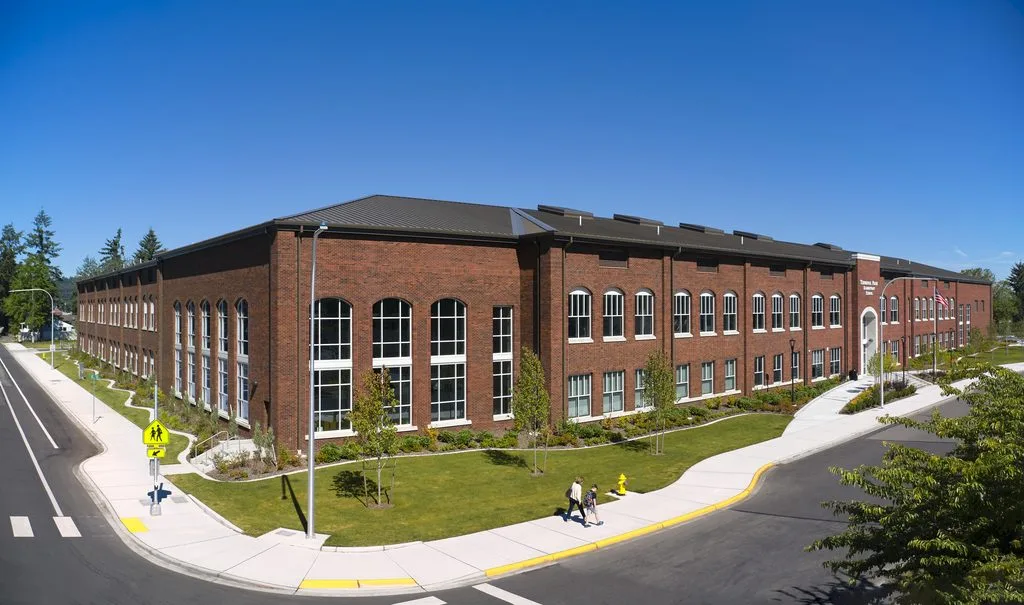
A recent elementary school modernization project illustrates how districts often address multiple needs through a single investment, combining ADA parking upgrades, circulation improvements, and stormwater infrastructure enhancements.
Modernization priorities can also vary significantly between urban and rural districts. While schools in more developed communities often focus on traffic circulation, utility capacity, and campus security, rural districts often place additional emphasis on facilities that support broader community use.
Fierst noted that schools in many rural communities serve as gathering places for events and activities beyond the school day.
“It’s really a center of community activity,” Fierst said.
As a result, modernization projects in rural districts often support both student needs and broader community use, including upgrades to athletic facilities. In some cases, natural grass fields have been replaced with synthetic turf and enhanced drainage systems to improve year-round usability and reduce weather-related disruptions.
“The synthetic turf field will allow for more all-weather use throughout the year,” Fierst explained.” The drainage system helps eliminate standing water and keeps the field usable for longer periods.”
These types of modernization projects also highlight an important reality: schools are often required to remain operational while improvements are being designed and constructed. Balancing construction activities with ongoing school operations requires careful planning and coordination among districts, designers, and contractors.
For districts beginning modernization projects, Fierst emphasizes the importance of strategically evaluating which elements of a campus can be preserved.
“If you can reuse portions of existing pavement or infrastructure, there can be significant cost savings,” he said. “The key is balancing what should be preserved and what should be replaced while still meeting today’s requirements.”
As school districts continue investing in aging facilities, modernization is helping schools adapt to changing expectations while preparing for future generations.
Many of the most important improvements may never be seen from inside a classroom, but they are essential to creating campuses that are safer, more efficient, and better equipped to serve students and communities for years to come.

Our experts are ready to provide insights and develop tailored strategies. We’ll help you move your project forward with confidence.