
The Vital Role of Trees and Wetlands in Green Infrastructure
Author: Maddie Olson
In the Pacific Northwest, abundant rainfall shapes our lush landscapes of forests, wetlands, and waterways. These natural systems are not just scenic—they are essential components of green infrastructure, a sustainable approach to managing stormwater that mimics natural hydrological processes. Unlike traditional “gray” infrastructure, which relies on underground pipes and treatment facilities, green infrastructure manages water at its source using vegetation, soils, and natural systems.
Trees: Natural Stormwater Managers
Mature trees are powerful allies in stormwater management. Their canopies intercept rainfall, providing for evaporation as well as reducing the velocity of water hitting the ground, which helps prevent erosion and flooding. Meanwhile, their extensive root systems absorb and store stormwater, promoting infiltration and groundwater recharge.
According to the Washington Stormwater Center, integrating trees into stormwater best management practices (BMPs) can significantly enhance system performance. Trees also provide co-benefits such as carbon sequestration, air purification, and urban cooling.
A local green infrastructure in Tacoma is AHBL’s Pacific Avenue Streetscape project, which involved the planting of 129 trees within Silva Cells and 14 streetside rain gardens. The Silva Cells and rain gardens serve to treat and slow the flow of stormwater to the Foss Waterway, demonstrating how landscape-based infrastructure can improve both water quality and urban livability.
Wetlands: Natural Water Filters
Wetlands—whether natural, restored, or constructed—are among the most effective ecosystems for treating stormwater. They trap sediment, remove excess nutrients like nitrogen and phosphorus, and provide critical habitat for wildlife. Wetlands also store floodwaters and recharge aquifers, making them vital for climate resilience.
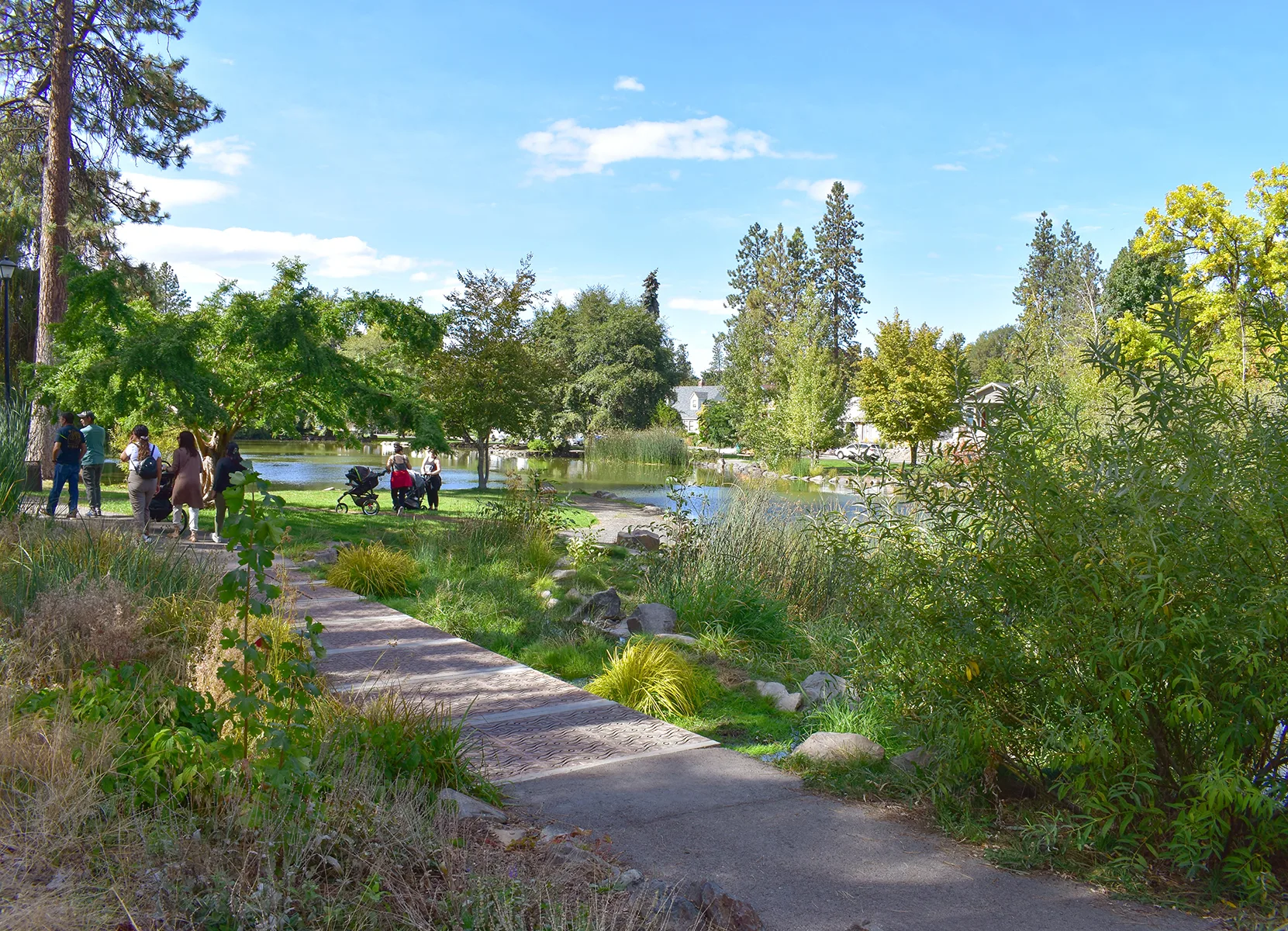
The EPA notes the importance of wetlands as a vital component of green infrastructure, noting their ability to reduce runoff and improve water quality through natural treatment processes. In urban areas, constructed wetlands offer a space-efficient solution. At Spokane’s Manito Park, AHBL designed a wetland treatment feature as part of the Mirror Pond restoration. This system filters nutrient-rich water through a series of planted areas before returning it to the pond, reducing harmful algae blooms and restoring ecological balance.
Integrating Green Infrastructure into Urban Planning
The Washington Stormwater Center provides tools like AHBL’s LID Guidebook, which helps municipalities incorporate green infrastructure into local planning and zoning codes. These tools support the adoption of practices such as tree planting, permeable pavements, and wetland restoration, making green infrastructure a standard part of urban development.
Landscape architects also play a pivotal role. According to the American Society of Landscape Architects (ASLA), they design carbon-sequestering landscapes—like forests and wetlands—that not only manage stormwater but also mitigate climate change by drawing down atmospheric carbon.
Community Engagement and Education
Public understanding and support are critical to the success of green infrastructure. The Washington Stormwater Center’s Green Stormwater Infrastructure (GSI) Assistance Programs Guidebook emphasizes the importance of community engagement. Educational programs, demonstration projects, and participatory planning processes help residents understand the benefits of green infrastructure and encourage stewardship of local ecosystems.
Trees and wetlands are not just beautiful features of the Pacific Northwest—they are vital, living infrastructure. By integrating these natural systems into our cities and towns, we can manage stormwater more effectively, enhance biodiversity, and build more resilient and beautiful communities. As climate change intensifies, investing in green infrastructure is not just smart planning—it’s essential for a sustainable future.

Our experts are ready to provide insights and develop tailored strategies. We’ll help you move your project forward with confidence.